
- BetterUnite supports three types of event tickets: Single Tickets, Group Tickets, and Combination Tickets. This article explains how to create, configure, and edit each ticket type.
- To get started, open your event, click Edit Event, then choose Tickets & offers in the left menu (under Set up).

Adding Single Tickets
A Single Ticket is the most basic ticket type and serves as the building block for Group and Sponsorship tickets.
- A Group Ticket is built from a Single Ticket, so create the Single Ticket first. Sponsorships that include tickets also use ticket types; sponsorships without tickets do not (see Sponsorships). You can hide your Single Ticket so that it cannot be purchased if needed.
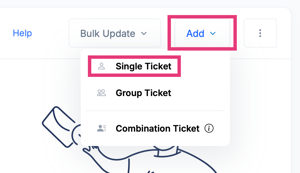
- To add single tickets click on Add and then Single Ticket.
Ticket Options Explained
When you add or edit a ticket, the panel opens with the new organized layout. It has the same settings as before, grouped so the everyday ones are up front and the rest are tucked into collapsible sections. Here is what everything is for.
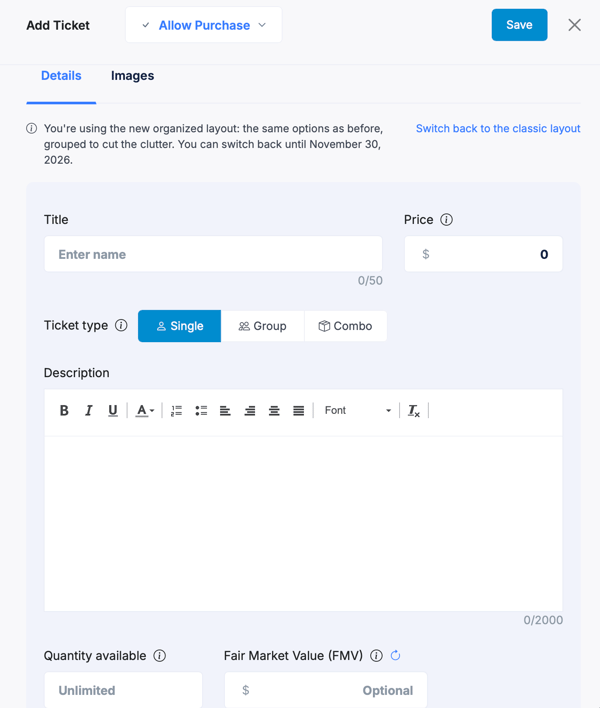
The top of the panel
- Add Ticket / Edit Ticket: the name of the panel changes depending on whether you are creating a new ticket or editing an existing one.
- Access dropdown (top right): controls who can see and buy this ticket.
- Not visible to guests: the ticket is hidden from guests and the public. Use this while you are still building a ticket, or to retire one without deleting it.
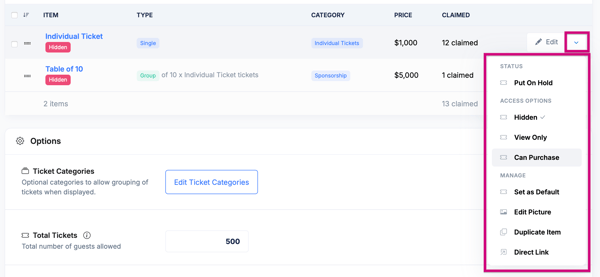
- View only: the ticket shows on your page but cannot be purchased. Handy for announcing a ticket before it goes on sale, or showing a ticket level that is closed.
- Allow bids or purchase: the ticket is visible and can be bought. This is the setting for a live, on-sale ticket.
- Save: saves your changes and closes the panel.
- Details and Images tabs: Details holds all the settings below. Images is where you add pictures for the ticket. If you choose the Combo ticket type, a Combo Items tab also appears.
The basics (always visible)
These are the details every ticket has, so they sit at the top and are never hidden in a group.
- Title: the name guests see, up to 50 characters. For example, "General Admission" or "VIP Table of 10".
- Price: the minimum amount someone pays for this ticket. Enter 0 for a free ticket. Leave it blank to let people choose their own amount. You can change the price until the first purchase is made.
- Ticket type: how the ticket is sold.
- Single: one ticket per purchase, admitting one guest.
- Group: one purchase that contains several of one kind of ticket, such as a table of ten. The buyer gets that many guest slots to fill. When you pick Group, you also choose the Quantity included (for example 8 guests) and the Included ticket type. You can change these until the first purchase.
- Combo: one purchase that bundles different items together, such as a ticket plus a raffle entry. You pick the items on the Combo Items tab. (Combo is only shown on plans that include Combination Tickets.)
- Description: optional text shown with the ticket, up to 2,000 characters. Use it to say what is included, such as dinner, drinks or seating.
- Quantity available: how many of this ticket can be sold. Leave it blank for unlimited. Use it for limited seating.
- Fair Market Value (FMV): the part of the price that is not tax-deductible, such as the dinner or gifts a guest receives. Receipts show the amount paid minus the fair market value as the deductible amount. The refresh arrow next to the label recalculates the deductible amount on every purchase of this ticket.
Ticket options (the collapsible groups)
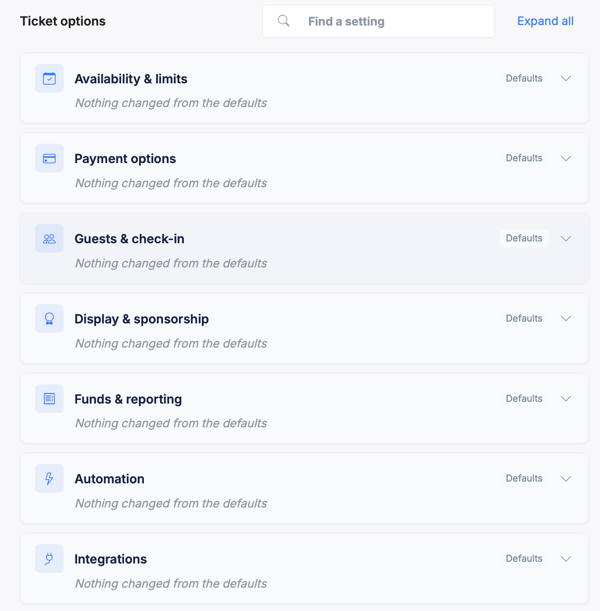
Below the basics is the Ticket options bar:
- Find a setting: type a word to jump straight to a setting. It also finds settings by their old names from before the redesign, so searching what you used to call something still works.
- Expand all: opens every group at once. Click it again to close them.
Each group is a card. When a group is closed, it shows Defaults and the line "Nothing changed from the defaults" if you haven't changed anything in it. Once you change a setting, the card shows a count and a short summary of what you changed (for example "Max 4 per order · Waitlist on"), so you can see at a glance what is customized without opening it. Groups that don't apply to the kind of ticket you are editing are not shown.
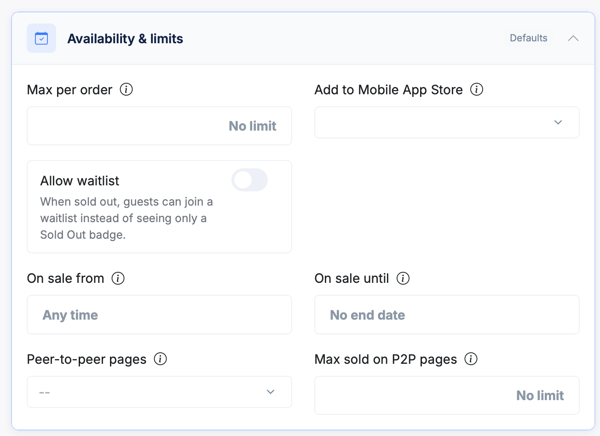
Availability & limits
Controls when, where and how many of this ticket can be bought.
- Max per order: the most one person can buy in a single checkout. Leave blank for no limit. Use it to stop one buyer from taking all of a limited ticket.
- Add to Mobile App Store: choose whether this ticket is listed in the mobile app store front, for selling at the event from the app.
- Allow waitlist: when the ticket sells out, guests can join a waitlist instead of just seeing a Sold Out badge. If a spot opens up, the waitlist can be offered the seat.
- On sale from: the ticket is not shown before this date and time. Use it to open sales on a set day. (Timed ticketing is a plan feature.)
- On sale until: the ticket is not shown after this date and time. Use it for an early-bird price that ends on a set date.
- Peer-to-peer pages: choose whether the ticket appears on your main campaign page, on your peer-to-peer supporters' fundraising pages, or both. Both is the default.
- Max sold on P2P pages: the most that can be sold through supporters' fundraising pages. Leave blank for no limit.
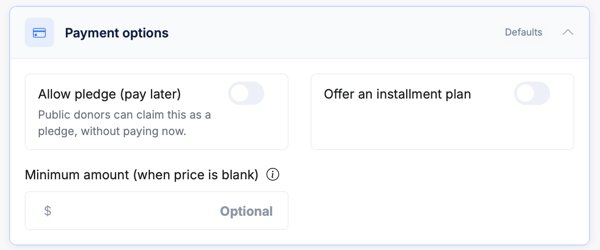
Payment options
Controls how the buyer can pay for this ticket.
- Allow pledge (pay later): public donors can claim the ticket as a pledge without paying right away. Use it when you invoice ticket buyers later.
- Offer an installment plan: lets the buyer split the payment into several payments. When on, you choose the payment frequency (weekly, monthly, quarterly or annually) and the number of payments (2 to 36). This setting only appears when your account has a payment processor connected that supports it.
- Minimum amount (when price is blank): if you left the price blank so people choose their own amount, this sets the lowest amount they can give.
Depending on your event, you may also see Check out as, which sets whether this item checks out as an Item for Sale or a Giving Level, and Charge as soon as it is added to the cart, which charges the guest immediately when they add it themselves instead of at checkout.
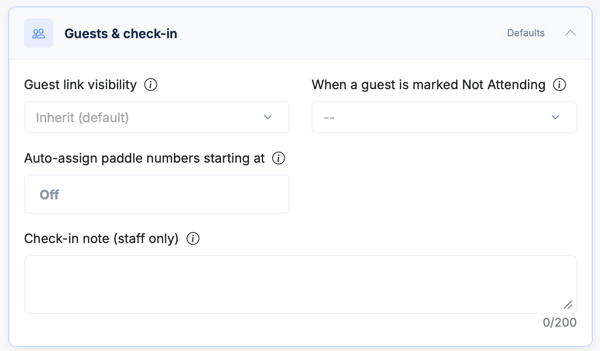
Guests & check-in
Controls what happens with the guests who come with this ticket.
- Guest link visibility: each guest has a personal event link for things like the silent auction. This chooses when this ticket's guests receive it. Leave it on Inherit (default) to use the event's setting on the Guest Experience tab, or choose Upon Purchase, Upon Check-in, Never or On Schedule for this ticket only. Use it to give a Virtual Bidder ticket its link right away while in-room guests get theirs at the door.
- When a guest is marked Not Attending: optionally remove that guest's slot from the registration automatically. Choose Remove Guest slot from registration and the guest is deleted from the purchase when someone marks them Not Attending. Leave it blank to keep the guest on the list with that status.
- Auto-assign paddle numbers starting at: each ticket purchased gets the next available paddle number from the number you enter. Leave it off to assign paddle numbers yourself.
- Check-in note (staff only): a note of up to 200 characters shown to whoever checks in a guest with this ticket. For example, "Vegetarian meal" or "Sponsor: give gift bag".
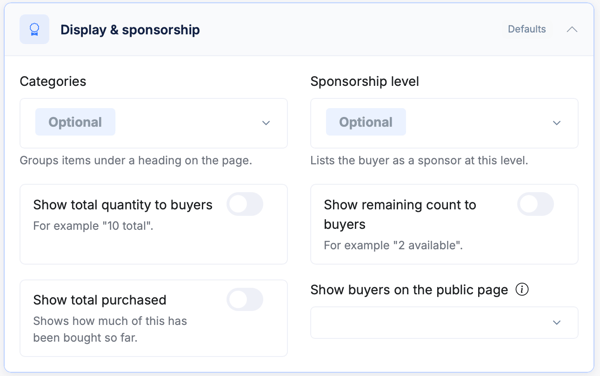
Display & sponsorship
Controls how the ticket looks on your page and whether it counts as a sponsorship.
- Categories: groups tickets under a heading on the page, such as "Tickets" or "Add-ons".
- Sponsorship level: lists the buyer as a sponsor at this level. Use it for sponsor tickets so sponsors are recognized on your page.
- Show total quantity to buyers: shows how many of this ticket exist, for example "10 total".
- Show remaining count to buyers: shows how many are left, for example "2 available". It creates urgency for limited tickets.
- Show total purchased: shows how much of this ticket has been bought so far.
- Show buyers on the public page: lists the buyers (and their guests) on your public page. Choose to show nothing, an abbreviated name (first name and last initial), or the full name. Say so on your campaign page in case someone prefers not to appear. Anonymous choices are always honored.
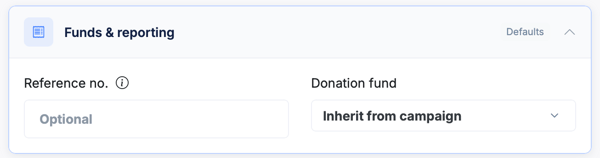
Funds & reporting
Controls how the money from this ticket is tracked.
- Reference no.: an optional internal reference number, up to 20 characters. Use it to match the ticket to an item code in your own records.
- Donation fund: the fund the proceeds go to. Inherit from campaign uses the event's fund. Choose a different fund to send this ticket's income somewhere else. This only appears if your account has funds set up.
- Segment: the same idea for giving segments, when your account uses them.
If your event sells items that need sales tax, you may also see Flag for sales tax, which shows a reminder in the cart to add sales tax. It does not calculate the tax.
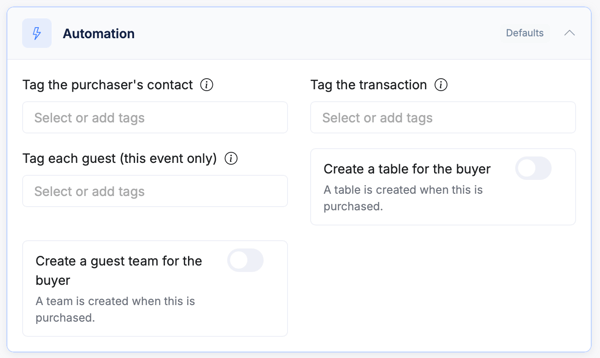
Automation
Things BetterUnite does for you automatically when someone buys this ticket. Tagging is available on plans that include auto-tagging.
- Tag the purchaser's contact: adds these tags to the buyer's contact record. Use it to mark everyone who bought a sponsor ticket.
- Tag the transaction: adds these tags to the purchase record.
- Tag each guest (this event only): adds these tags to each guest on their record in this event, not on their contact record. They show on the check-in page and can be used to target guest emails and texts.
- Create a table for the buyer: a table is created automatically when this ticket is purchased. Use it for table sponsorships.
- Create a guest team for the buyer: a team is created automatically when this ticket is purchased.
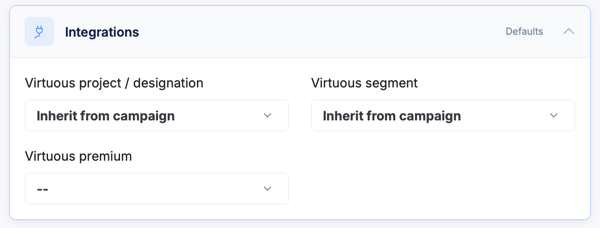
Integrations
This group only appears if your account is connected to Virtuous or Salesforce.
- Virtuous project / designation, Virtuous segment, Virtuous premium: map this ticket to the matching Virtuous records. Inherit from campaign uses the event's mapping.
- Salesforce field mapping: fills in Salesforce fields for the record this ticket creates when donations sync itemized. Anything left blank uses the campaign's advanced settings.
Adding Group Tickets
- To add Group Tickets Click on ADD > Group Ticket.

- A Group Ticket bundles multiple Single Tickets into one purchasable unit (e.g., a table of 10). In addition to the standard Single Ticket fields, Group Tickets require a few additional fields described below.
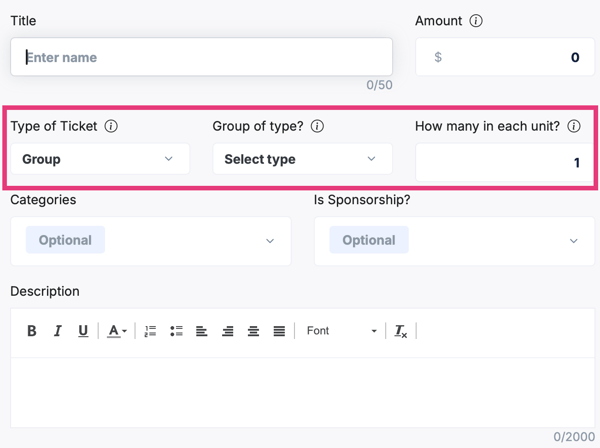
- Group of Type?: Select which ticket type this group is made of.
- How many in each unit: How many of that ticket type make up this group ticket. (ie. A Table of 10 would be a group of 10 Single Tickets.)
- For more information see Group Tickets.
Adding Combination Tickets
A Combination Ticket bundles multiple ticket types and/or other event offerings — such as Raffle tickets or Items for Sale — into a single purchasable package. Combination tickets may be restricted on some accounts; if you see an upgrade prompt when you click it, that is why.
- To add a Combination Ticket, click Add > Combination Ticket.

- Combination tickets will then allow you to Select Combo Items and how many of them are included in the combo ticket.
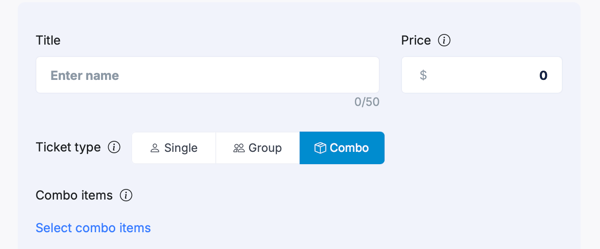
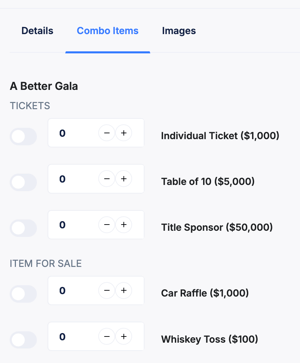
- For more information on Adding Combination Tickets to include other linked event tickets please see the article Combination Tickets.
Edit Ticket
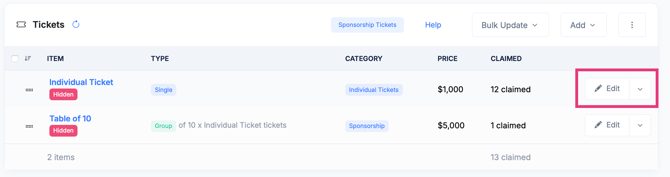
- To edit a ticket click on the Edit button to the right of the ticket.
- You can also click the dropdown arrow for quick actions such as updating its current Status, Access Options, and managing its presentation.
Related articles
- Group Tickets
- Combination Tickets
- Sponsorships
- Ticket Waitlisting
- Access and Discount Codes
- Can I Default a Ticket Selection for my Guests?
- Can I Choose Where an Event Offer is Shown?
- Event Offers - Images and Dimensions
- How to Bulk Import Event Offers
- When do Guests get Sent Their Guest Link?
- Assign Bidder Numbers
- Is There a Way to View and Export who Bought Which Event Offers?
Need Additional Help?
We're here to assist you in any way we can. Don't hesitate to reach out to support@betterunite.com
Let's go do some good.